What Is Finger Food Catering? Everything You Need to Know
Think of a menu where you do not need to choose one single main course. Think of a magical moment wh...
Read article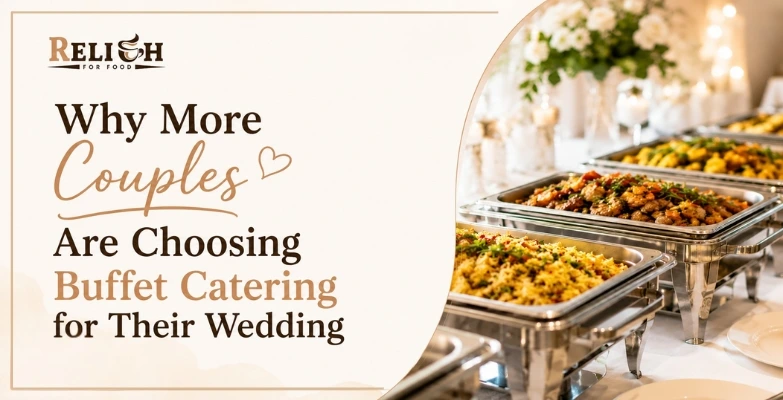
Not every couple wants a formal sit-down dinner. Some want their wedding to feel like a celebration; loud, warm, full of movement, with guests talking to each other rather than staring at the back of someone's head across a banquet table. That shift in thinking is a big part of why buffet catering has made such a strong comeback at weddings in 2026.
It is not about cutting corners. The best buffet setups are visually stunning, thoughtfully curated, and every bit as elevated as a plated menu. The difference is that they give guests something a plated dinner rarely does, freedom. Freedom to eat what they want, go back for more, and linger over the parts of the meal they actually love.
At Relish for Food, we have seen this shift happen in real time. More couples are coming to us with a clear vision: they want food that feels generous, relaxed, and genuinely personal. A buffet, done properly, delivers exactly that.
Buffet catering at a wedding is a service style where food is arranged across one or more serving stations and guests help themselves throughout the reception. It can range from casual grazing tables to elaborate themed spreads with multiple stations and live elements.
It is not a single format, it is a category. Some couples opt for one long grazing table stacked with seasonal produce, artisan cheeses, and cured meats. Others choose to opt for several stations offering various cuisines or courses. This type of catering bends according to the needs of the wedding and not vice versa.
Buffet catering gives wedding couples flexibility, variety, and a more social dining experience; all while accommodating different dietary needs across a mixed guest list more easily than a fixed plated menu.
Here is a straightforward look at how the two formats compare:
| Area | Plated Dinner | Buffet Catering |
| Guest Flexibility | Fixed menu per person | Guests choose what and how much |
| Dietary Accommodations | Pre-ordered, reliant on advance info | Visual, self-directed, easier to manage |
| Social Atmosphere | Seated, structured, formal | Relaxed, mobile, more conversational |
| Menu Variety | Limited per course | Wide; multiple dishes across stations |
| Cost Per Head | Generally higher | Often more cost-effective |
| Visual Impact | Plate presentation | Table and station styling |
The right choice depends entirely on the couple and the vibe they want. But for weddings where the priority is warmth, movement, and a genuinely good time, a buffet is very hard to beat.
The best wedding buffet food is generous, visually appealing, and varied enough to satisfy a mixed crowd, including guests with dietary restrictions. Seasonal ingredients, strong flavours, and a clear visual identity across the spread make all the difference.
Some approaches that consistently work well:
The biggest concern couples usually have about wedding buffets is the queue. Nobody wants their guests standing in a long line while the music plays and the dance floor sits empty.
The answer is not to abandon the buffet format; it is to design it properly. Here is how it works in practice:
Spreading the food across two or three stations means guests naturally distribute themselves. No single bottleneck. No queue that snakes around the room.
Rather than opening the buffet to the entire room at once, release tables in waves. It keeps things moving, feels more considered, and means the food stays fresh and well-presented throughout service.
Having a team member at each station; to serve, replenish, and keep things looking good makes an enormous difference. A staffed station looks professional. An unstaffed one starts to look chaotic after fifteen minutes.
Linen, risers, fresh herbs, flowers, signage... all of it contributes to how the buffet reads in the room. A beautifully styled spread feels intentional. It signals that care went into every decision.
Walk through the room layout with your catering team before the day. Where will guests enter the buffet? Where will they sit? How will the stations be positioned relative to the dance floor? These decisions affect everything, and they are easy to get right when they are thought through in advance.
Wedding catering in a buffet format involves more than just cooking the food. It covers menu design, quantity planning, station layout, staffing, service timing, and dietary management, all of which need to be coordinated across the full timeline of the day.
The best wedding catering partners treat the buffet as a complete experience, not just a list of dishes. That means understanding how many guests will be eating at once, how long the service window is, how to keep hot food hot and cold food cold across a two-hour reception, and how to make the spread look just as good at the end of service as it did at the start.
At Relish Restaurant, every wedding buffet we manage is planned down to that level of detail. The food is important but the execution is what actually makes the day work.
The right catering services partner will help you work that out honestly. Not every caterer will tell you when a different format might suit you better. The ones worth trusting will.
Get in touch with the team at Relish Cafe to talk through your wedding catering ideas, and let us help you build a day your guests will still be talking about long after the last plate is cleared.
Grab your first perfect bite now!