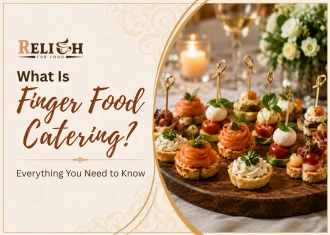
What Is Finger Food Catering? Everything You Need to Know
Think of a menu where you do not need to choose one single main course. Think of a magical moment wh...
Read article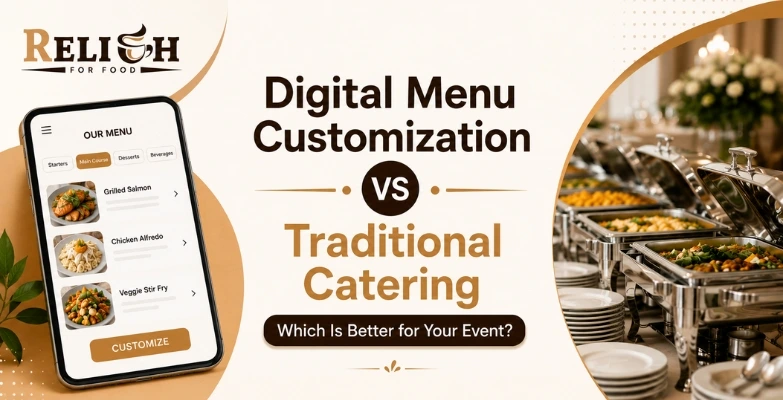
It totally depends upon the event, the host, and how much control you want over the details. Event catering Wellington hosts are increasingly choosing digital menu customization for the speed and transparency it offers, but traditional catering still holds its ground for complex, high-touch occasions where relationship and experience matter more than convenience. Neither is universally better. But one of them is almost certainly better for your specific event, and knowing the difference saves you a lot of stress before the day arrives.
Digital menu customization means building your event menu online; choosing dishes, adjusting portions, managing dietary requirements, and confirming pricing all before you've spoken to anyone on the phone.
Instead of waiting on a quote that arrives three days later as a PDF you can't edit, you see everything in real time. Swap a main course, add a dessert station, remove a starter; the total updates instantly and the menu reflects exactly what you've chosen. No back and forth, no assumptions, no surprises on the invoice.
At Relish for Food, digital menu tools are built around one principle: the host should feel in control of their event from the very first decision, not just the final one. That clarity changes how the whole planning process feels.
| Aspect | Digital Menu Customization | Traditional Catering |
| Speed Of Planning | Minutes; build and confirm online | Days; quotes, calls, revisions |
| Pricing Transparency | Real-time, itemized | Quote-based, unclear |
| Flexibility | Instant, up to a set deadline | Dependent on caterer availability |
| Dietary Management | Built into the selection process | Discussed and tracked manually |
| Personal Touch | Lower; screen-based | High; relationship-driven |
| Best Suited For | Straightforward events, busy hosts | Complex, high-touch, culturally specific events |
| Guest Experience | Consistent and well-planned | Highly personalized when done well |
The format that works is the one that matches the complexity of your event and the amount of time you realistically have to plan it. Work through this in order and the answer usually becomes obvious.
A birthday dinner for twenty people with a straightforward menu is a digital job. A three-day wedding celebration with specific cultural requirements and fifteen different dietary needs is a traditional planning job.
Digital customization compresses planning to hours. Traditional catering stretches it across days or weeks. If you're already juggling a full schedule, that time difference matters.
If you need to know the exact cost before you commit to anything, digital platforms give you that immediately. Traditional quotes can shift as details change, which creates uncertainty if you're working within a fixed number.
Some hosts need to taste before they decide. Traditional catering accommodates this naturally. Digital-first caterers are catching up, but it's still worth confirming whether tastings are available before you book.
The best Catering Wellington teams now offer both pathways, digital tools for hosts who want speed and control, and full traditional planning for those who want depth and personal service. Relish Café works across both formats, so the choice stays with the host rather than being dictated by how the caterer prefers to work.
Whichever format you choose, the biggest mistake is deciding too late. Digital or traditional, good caterers book up. Give yourself breathing room, two to three weeks minimum for straightforward events, four to six for anything more involved.
Digital menu customization earns its place most clearly when the event is defined, the guest list is manageable, and the host needs speed and certainty more than deep personalisation.
Corporate lunches and team events are a natural fit. The format is predictable, dietary requirements can be collected in advance through a quick internal survey, and nobody wants to spend three days going back and forth with a caterer over a midweek lunch setup. Digital platforms cut that process to under an hour.
Birthday parties and social gatherings work well too, especially when the host already knows what kind of food they want and just needs a clean, transparent way to confirm and book it.
The events where digital customization starts to stretch are the ones with highly specific cultural requirements, intricate multi-course dining formats, or occasions where the presentation needs to be discussed and agreed on in detail. Those conversations still happen best in person.
Relish Café works with hosts across both digital and traditional planning formats with the right catering menu approach so whether you want to build your menu online in twenty minutes or sit down and talk through every detail, the team is ready for that conversation.
Get in touch today and let's work out what actually makes sense for your event.