What Is Finger Food Catering? Everything You Need to Know
Think of a menu where you do not need to choose one single main course. Think of a magical moment wh...
Read article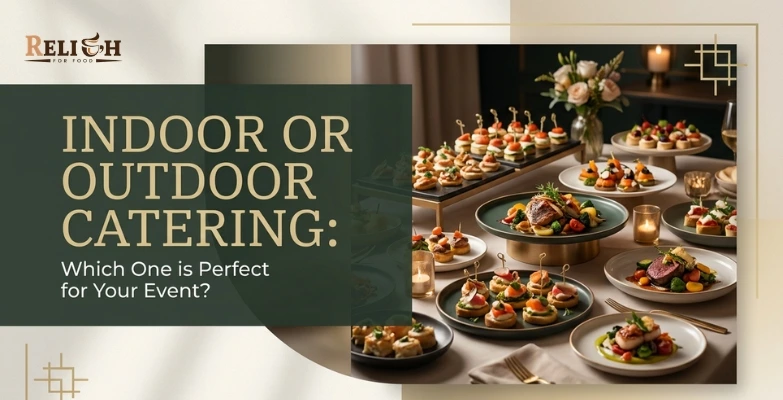
Choosing between indoor and outdoor event catering comes down to three things; the nature of your event, the experience you want your guests to have, and how much unpredictability you're comfortable managing. Both setups can be done beautifully. But they demand very different planning, and picking the wrong one for your occasion creates problems that are hard to fix on the day itself.
Indoor catering gives you control over every variable that matters; temperature, lighting, acoustics, and service flow. When the environment is predictable, the catering team can work faster, more cleanly, and with far less contingency planning.
Food stays at the right temperature longer indoors. Hot dishes hold their heat, cold dishes stay fresh, and there's no wind knocking over table setups or dust settling on an open spread. For events where the food itself is a centrepiece; a formal dinner, a product launch, a corporate celebration... indoor catering consistently delivers a cleaner result.
Indoor corporate and private events are set up with full attention to how the room flows. Where guests enter, where food is positioned, how service moves through the space... all of it is mapped before the event begins. Dietary management is also easier indoors. Labelling stays in place, separate stations hold their position, and the team can monitor and replenish without the chaos that outdoor environments sometimes introduce.
Outdoor catering creates an atmosphere that no indoor venue can fully replicate and for the right event, that atmosphere is exactly what makes it memorable. Garden parties, outdoor weddings, cultural celebrations, and casual corporate picnics all come alive in a way that four walls simply don't allow.
The energy of an outdoor event is different. Guests move more freely, conversations flow more naturally, and the setting does a lot of the work that a decorated indoor venue would otherwise need to. When the weather cooperates, outdoor catering is genuinely hard to beat.
The planning requirements are just higher. A professional catering team accounts for wind, sun exposure, ground conditions, and weather contingencies before the event day arrives not on it. Outdoor event setups must include a full site assessment, so nothing about the environment catches the team off guard.
Food selection matters more outdoors too. Dishes that travel well, hold their temperature in open air, and present cleanly without elaborate plating are the ones that work. A caterer with outdoor experience knows this instinctively and builds the menu around it.
Once the right questions have been asked in the right order, the decision is quite simple. The steps to follow are:
If you want your event to be more formal and structured, you should go with indoor. But if the atmosphere is meant to be relaxed and social, then choose the outdoor option.
An outdoor caterer cannot afford to take risks, especially when there is no back-up plan for bad weather. Always know the typical kind of weather in the season.
Large groups move differently outdoors; more space is needed, service flow changes, and access points matter more. Indoor venues contain and direct guest movement more easily.
Whether indoor or outdoor, your caterer needs to see or understand the space before planning begins. Catering Wellington events means knowing the local venues, the typical conditions, and the logistical quirks that come with each location, which is exactly what Relish Café brings to every booking.
A marquee, a covered area, an indoor fallback, outdoor events need a plan B that is genuinely usable, not just theoretical.
Outdoor setups often need generators, additional warming equipment, and portable serving stations. Know what your caterer provides and what the venue supplies before the day arrives.
| Feature | Indoor Catering | Outdoor Catering |
| Weather Dependency | None | High; Needs contingency plan |
| Food Temperature | Easy to maintain | Requires specialist equipment |
| Atmosphere | Formal, controlled, elegant | Open, relaxed, memorable |
| Setup Complexity | Moderate | Higher; Site assessment needed |
| Best Suited For | Corporate events and formal dinners | Garden parties, weddings, casual outings |
| Guest Experience | Polished and structured | Free-flowing and immersive |
Most mistakes happen because people choose the venue before they've defined the event; and then try to make the catering fit around a decision that was already made for the wrong reasons.
Your catering style should follow your event theme directly; the food, the service format, and the presentation should all feel like they belong to the same occasion. When the catering matches the theme, the entire event feels intentional and considered rather than pieced together.
Catering Wellington events means understanding that no two occasions are the same; a waterfront corporate lunch needs a completely different approach to a backyard celebration for thirty people. Relish Café works through the theme, the tone, and the guest list before a single dish is confirmed, so everything that arrives on the day feels like it was always supposed to be there.
Both formats, when handled by a team that knows what they're doing, deliver results that guests remember. That's what great catering services like Relish Restaurant do; they take up the environment you've chosen and make it work beautifully, whatever the setting. Get in touch with us today and figure out the perfect setup for your next event!